I have spent most of my life pretending
Compressing myself to fit neatly inside your life
Today, I stop pretending
Sometime in the fall of 2019, when I was in my early thirties and moving through a period of doubt and self-discovery, I wrote a poem called “The Mountain.” In the throes of my undergraduate degree, I relearned the details of the spread of Christianity, and the devastation Europeans caused while they carried out horrific genocide of indigenous peoples. I was encouraged to think critically and form individualized ideas in an environment that omitted or vilified spirituality entirely. Not only that, but I was well-established in my adult life, completely independent from my parents and their Christian influence, and entirely enmeshed in academia.
For someone like me, a natural skeptic and people pleaser, the hyper-critical and problem solving nature of higher ed left little space for spirituality, especially if that spirituality centered on the Trinity. The classroom should have been a space to share ideas openly and cross-culturally, but with Christianity being branded a privileged, colonialist white-washed play for power, I was terrified to be authentic. My silence sent me further into doubt, and I soon drank up the one-sided rhetoric and theories pumped into the American classroom.
During this time, I experienced a shift in what I thought I knew about the world, and that understanding upended what I thought I knew about God. I didn’t realize that I stood at a turning point in my faith and that the decisions I would make on that precipice would leave me lost in a spiritual desert for five years, clinging to the belief that if I could do enough, then in turn, I might be enough.
The Mountain
I wait for You upon the precipice
Crying out, my voice echoes far below
The lake behind me rests cradled in a memory
of a woman, I once knew long agoI can almost see her in its frigid depths
and smell her scent carried on Your gentle wind
I thought I heard her in Your lapping waters
and then its surface grew silent once againSo, I wait for myself upon the precipice
Alone and hopeful, I patiently wait
Later in that degree, my mom would find a scrapbook from my freshman year of high school, where I wrote poetry and essays to fulfill the requirements of my final English portfolio. I was surprised to read that I documented my love for writing poetry decades earlier, but somewhere between fourteen and adulthood, I abandoned everything precious to me. I have often surrendered my gifts to pursue dreams others told me would bring success or happiness, and I constantly measure myself against the expectations of the world. Through the years, I gave up more of my identity in Christ to meet the specifications of others, and eventually, I gave up that relationship entirely to remain more palatable to the social circles I found myself in. And my spirit rebelled within me. I would succumb to depression, get swept away by anxiety, and spend many hours dreaming of a day when I would no longer have to wake up.
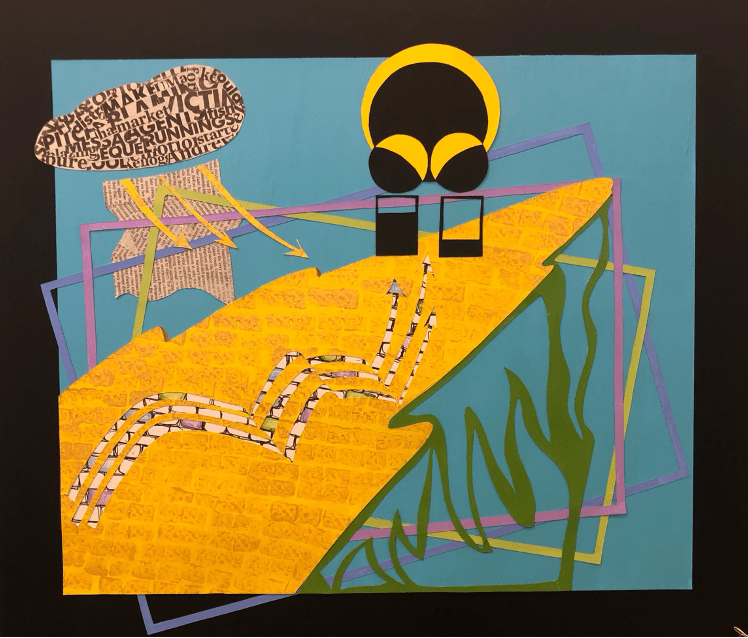
“The Mountain” was the second poem I penned as an adult, and with its creation, my desire to write resurfaced. The imagery used was deliberate, and later became a recurring theme in my art and poetry. When I began authoring work, I started to believe that it is what I had been called to do but I have continuously fought against it. How do you become a writer in 2025? Won’t AI out-write and out-preform me?
The Ascent
Growing up in a Christian home in the Pacific Northwest, my summers consisted of attending a local Bible camp. Nestled in the foothills alongside a small lake, the camp’s rustic little white chapel greeted everyone as they pulled down the narrow gravel drive. Tucked in the woods behind the chapel sat the cabins, which housed prepubescent teens pretending they were grown when their parents dropped them off but stifled cries in sleeping bags late at night when the cabin lights went off. Over the years, I began to look forward to seeing familiar faces of the boys and girls I had connected with during previous summers. As I write this, I wonder where their lives are now, decades later, and thousands of miles between me and my home state.
If you were every positively impacted at a Bible camp, share your story in the comments below! I love to hear how people encounter God, so share your testimony.
It was at Bible camp between seventh and eighth grade that I first experienced the setting of “The Mountain.” Campers would stay one full week, schedules packed with events, games, chapel times, and sometimes, we were taken on field trips. One morning during this particular summer, campers woke early, walked down the gravel path to the dining hall to eat breakfast and pack our sack lunches for that day’s adventure. After we scraped our plates and thanked the cafeteria aids, we climbed aboard the repainted school bus, the camp’s name stenciled down its side, and drove a short distance to a rugged mountain road that would lead us to the start of our journey. That day, we would hike 3.5 miles up to the basin of Mount Blaine, eat lunch, and descend back to the trailhead where the bus would take us back to camp.
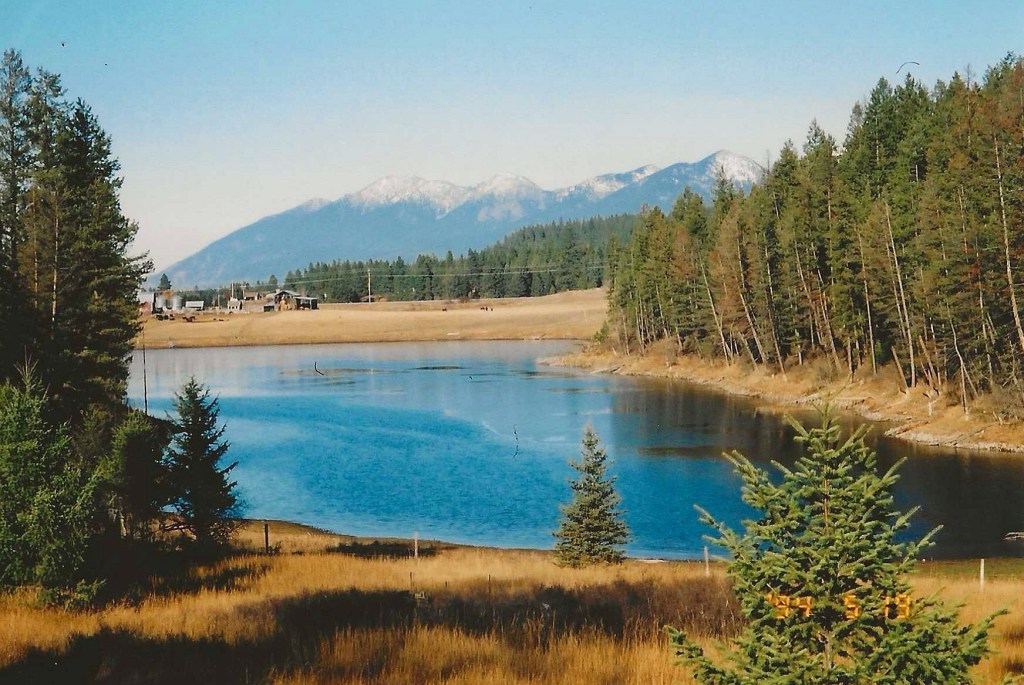
I don’t remember the details of the hike itself, but I know the peace that the woods offer, the smell of the pine, the birds announcing themselves in branches overhead. Fragments of this memory come back to me. The sky was brilliant blue with puffs of clouds chugging along to the rhythm of the breeze. Teens laughing and whispering as they scuffed up the mountain trail. Once at our destination, the basin cradled Jenny Lake, and her clear waters rested and sighed as wild teens squealed and snapped photos on disposable cameras along her banks.
I live in suburbia now and I often find myself sitting on my back deck staring at the clouds, stars, and storms that roll through. One of my main complaints about city living is the lack of nature here. I feel closest and most connected to God when I am sitting in His creation; how small and dependent on Him I feel in moments where I’m far from civilization surrounded by wilderness. If you are able to get out in nature, please do. Spend some time taking in His glory, creativity, and beauty. You won’t regret it.
Where's your favorite place to spend time with God?
The Precipice
While we ate our lunches, Jake, one of the male camp counselors, asked if anyone would like to hike to the summit to see what view sat at the top. Like most young girls, I was uncomfortable in my body. My skin never seemed to fit me right, so I covered as much of it as possible, often overdressing for the weather. That day, I imagine I wore my signature summer attire: baggy khaki pants, an oversized Nike windbreaker, a bucket hat over my short, mousy hair clipped back with barrettes close to my centered part, and scuffed Airwalk sneakers. I was a quiet, awkward tomboy who didn’t know how to be girly, and my best friend at camp was entirely my opposite.
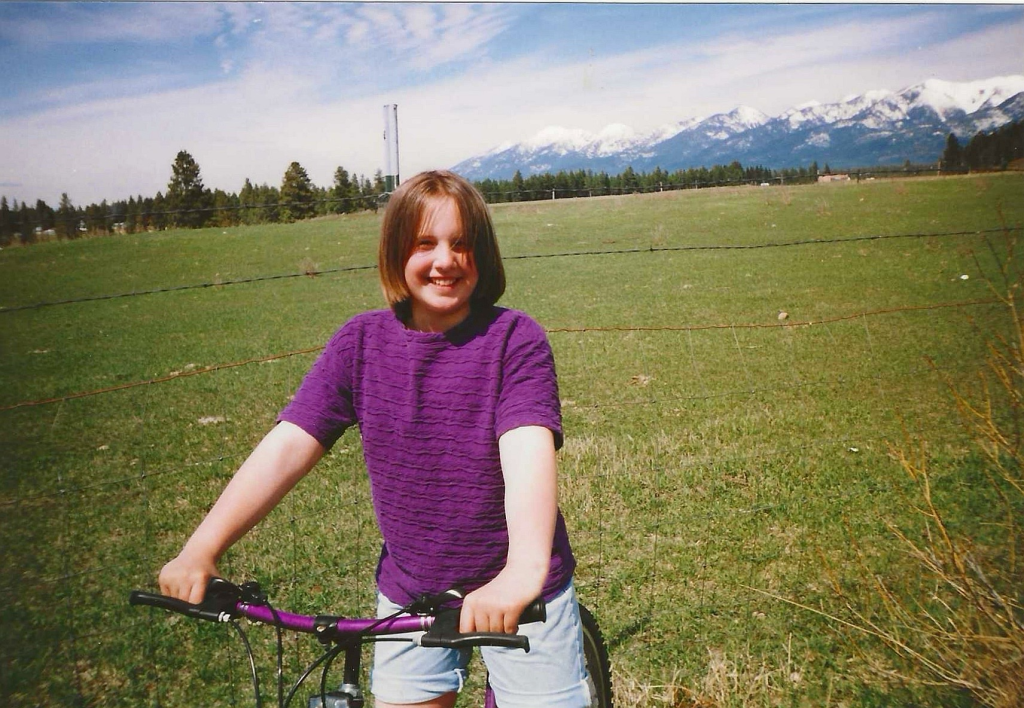
Jody was tall and thin; her long blond hair framed her sun-kissed cheeks, and her blue eyes were decorated with lacquered black lashes. She seemed comfortable with her budding breasts and dressed better than the Olson Twins (iykyk). I adored and envied her; she was everything I thought I wanted to be, and what’s worse, Jody had a crush on the same camp counselor I bashfully admired, and he was hiking to the top of the mountain with my friend eagerly chasing at his heels. Clambering clumsily up the hillside behind them, I made the ascent; my only motivation was to ogle the young man leading the pack, but what I found at the top was worth more. Even then, I felt how monumental it was.
Sometimes in life, God makes His presence so inarguably known that it commands your entire attention. Your body responds and begs you to your knees. Your heart, mind, and spirit fall into cadence, and you feel tiny against the backdrop of His mystery. As a preteen, I felt that then, and recalling this moment, I wish I would’ve responded in worship. It was deserving of that gesture. But what would Jake think? So, instead, I shifted my weight on my feet, uncomfortable and silent, staring out at His work. Behind me, Jenny Lake was a distant memory because there was a valley filled with wonder before me. Threads of cobalt water stitched together the patchwork quilt of emerald alfalfa and gold canola. The clouds dragged their heavy shadows across the fields, slid up the distant mountains, and then moved beyond sight on the other side of their peaks. This was my home, and it felt like God had created this moment for me. While I knew the landscape was extraordinary, I couldn’t have known I would cherish and carry this memory with me into adulthood.
I suppose starting here makes sense, considering the message I feel compelled to share. God doesn’t always feel tangible; sometimes, life sweeps us away, and we get lost in our own scenery. My view of God didn’t fall away instantaneously; instead, I slowly shifted my focus away from Him and onto myself. In what ways have you noticed distance between you and God? For me, I have to stay connected to other Christ-followers, pray unceasingly, and find time in nature (even if its just on my back porch). Life can become really dark without God in it, so I implore you to continuously seek Him, read His word daily, and let Him guide your steps.
So this is where I begin my descent, my fall from Grace. If you’re still with me, my story may get dark, uncomfortable, and outright make you cringe; but I promise, at the end of each post, I’ll share the good news about what God has done.
When has God felt tangible to you? How can you connect more with Him?
The Descent
In 2016, my life was suddenly stripped from me by an invisible disability called Meniere’s disease. With this came violent attacks of vertigo, unpredictable fluctuations in hearing, and deafening tinnitus. When I lost my hearing and balance, I lost a significant part of my independence, and as a result, I lost myself. I couldn’t see how I fit in a world built on oral communication and optimal mobility. I lamented my once-stable ability; I hated who I had become with Meniere’s disease. I so badly wanted my hearing and balance back, and at times, I still do. Some days and in some situations, I still hate it. Its sudden onset left me without time to prepare or adjust to a new level of functioning. As a young, uneducated single mother, my only real skill was arduous physical labor, which depended on a functioning vestibular system. What wasn’t so glaringly obvious was that I was also equipped as an avid communicator. Until my hearing failed me, I hadn’t realized how much I relied on it to survive each day. I was empty, unprepared, and completely blindsided by the rapid depletion of my ability.
Church and God had been an essential part of my young adulthood. I had quit drinking in 2014, and every morning and night, I would kneel beside my bed and pray, asking God to get me through each day and thanking Him for succeeding in that task each night. However, I didn’t know God. Not really. I was going through the motions but didn’t have a relationship with Him. My maturing mind couldn’t wrap itself around His greatness, the weight of His covenants, and my illness was proof to me that He doesn’t offer healing anymore. There were many moments where He felt almost tangible to me, but I was still living most of my days enveloped in sin and yearning for more.
Like many millennials, I turned to Facebook and documented, lamented, and prayed for answers using technology. One post caught the attention of a friend who suggested I apply for the University of Iowa’s Writer’s Workshop because my words left her wanting more. I knew I loved to write, but how could I possibly support my two young children, attend college, and make ends meet? I hadn’t even taken my ACTs or SATs; there was no way I would get into a university, especially one that offered a top-tier, competitive writing program.
Desperation often drives us to make choices we otherwise wouldn’t make. It pushes away fear and demands we take action without hesitation. But there was also a deep sense of knowing that I was supposed to pursue writing, a knowing that urged me to take that first step. I felt it was necessary to obey. Knowing is a command that resonates deeply within our soul, guiding us along a path we might not personally choose for ourselves. However, the combination of desperation and knowing were not enough to convince me that everything would turn out alright, so, with a lot of uncertainty, I left my job to enroll in a community college photojournalism program. It wasn’t the Writer’s Workshop, but it was a small step forward toward whatever God had in store for me.
In what ways have you stepped out in faith? Is it what you imagined it would be?
On the precipice, I thought I was waiting for some great becoming of self, but instead, it was a painful and necessary undoing. It led to suffering, isolation, and insanity, but this dark and desolate valley would fortify my faith and bring me to a place where I would walk together with Jesus. I believed I was on the cusp of some great unknown, a turning point, and I continued to wait for the moment when I would be in the place I was always meant to be. I thought that when I arrived at this imagined landmark, I would be able to write my story. As I waited for my metamorphosis, I lost sight of the one thing that would orchestrate my becoming: I lost sight of God.
 Fraudulent Life